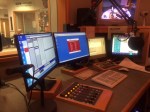
I am that human. I’m both an academic and a broadcaster based in the UK. After a spell in student and hospital radio I joined the BBC. I spent twenty years as a journalist, radio presenter and news editor. I then moved to academia, where I taught 18 year-old undergraduates the craft of radio and I investigated radio’s inspiration in novels, films, pop songs and art across the century. See below for details of my book. My research evidence is in the way radio provokes and prompts creative responses. So far that’s 44 years of experience.

These days I sit as a broadcaster and director of a community radio station in England, and as a writer with a monthly blog about the industry. Sign up by filling out the “Subscribe” box on this page.
So, to my thoughts on AI.

Firstly, let me be clear: technology has always been part of radio. From the beginning – in the 1920s – we had to invent and then adapt various things:
- studios, which sometimes needed a good clean, but still couldn’t fit a full orchestra
- acoustic treatments (seagrass or curtains anyone?)
- specialist microphones (ABXT for me)
- mixing desks (not properly until the early ’30s. Read here)
- outside broadcasts (click to see these crazy pics)
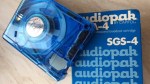
- and later, audio recording and tape editing. Could you sell a product called a Blattnerphone?
And then there were the very forms of radio: genres such as news, drama, music shows, sports commentary, talks, phone-ins and discussions. These had never existed before, just as the very medium of broadcast had to be created.

And broadcasters can be keen adopters of new tech.
At the Beeb in the 90s I was involved in training my team of journalists to use the new Windows-based software called ENPS. It took us away from carbon copies of scripts on mechanical typewriters and into a digital dawn – somewhat reluctantly amongst some colleagues who struggled with some of the shortcoming of ENPS.

Then from 2014 onwards BBC Radio began introducing virtual studios. The network of 40-odd local stations became playout locations for audio held on two large computer servers in England that supplied the files to the ViLoR system at each station.
All the while, of course, human beings were central to – and in control of – all the live playout. And this is my key concern. I’ll keep returning to it. Radio – for me – is a deeply human medium.
Which makes me ask, why might we even want to think about taking humans out of radio?
Let me start with the positives. Artificial Intelligence can be used to select music tracks and schedule adverts. Both of these can be in response to the automated analysis of audience statistics. But then the old DOS-based software, Selector, seems to’ve always been there: https://prefadelisten.com/2021/10/11/broadcasting-into-the-void-part-three/.
Doing staff rotas is another possibility. I always hated that part of my job as news editor. For data journalists there are clear benefits: trawling through lots of information to uncover exclusive stories.

It’s also some help in providing the subtitles for listen-again services. The BBC has already experimented with how generated subtitles on audio and podcasts can help to improve accessibility at BBC Sounds.
I did, pre-millennium, spend some shifts working on the Ceefax subtitles for the Look North regional TV news programme from Leeds. I made more mistakes, I freely admit, than any speech-audio-to-text identifier driven by a computer would’ve made.
For tech nerds, there’s someone still doing Ceefax online. Try this: https://nmsceefax.co.uk/

The Corporation is also working out how AI can be used to provide a first draft of a foreign language translation for News and Current Affairs material for the BBC World Service.
Elsewhere, away from broadcasting, AI is good for spotting and flagging up patterns in large data sets, medical research and diagnoses, security checks on large public spaces, patterns in social media communications, and so on.
All these tasks are data driven, to a large extent, and of course require human intervention to check the results.

The negatives… however… for me, are mostly on the creative side.
Firstly, a lack of human input concerns me. Indeed, the prospect of Artificial Intelligence replacing broadcast staff (journalists/admin/and technicians) – and the subsequent cutting of wages – was the subject of a House of Commons early day motion from last year (EDM 1046: 01 April 2025).
But again, there’s always been the keen application of technology in my industry. Just over twenty years ago I was delighted when a newly-graduated student of mine told me that she’d been offered overnight presentation shifts at Trax FM a commercial station in Doncaster in Yorkshire.

There was a catch, however. No longer would an overnight shift mean just that: being on air in the radio studio from midnight to six in the morning. No more! Instead, she came in at four in the afternoon, pre-recorded her links – which were then put into the Genesys computer-controlled play out system. One hour’s work instead of a whole night shift. She was home in time for tea, and the station owners had saved themselves a fortune in staff wages.

That’s now pretty much an industry standard. Every playout software I know for radio includes simple routines for doing what is known as “voice tracking”. The presenter doesn’t even need to be in the building – let alone in the same country. The only clue a listener may have is a lack of time checks. Otherwise, it sounds as if you have a friend on the airwaves…
I’ll share more of my thoughts in the next part of this series. To join and receive it click the Subscribe link on this page.

What we say on-air – and what others say about us as we speak through the microphone into the aether – is a recurring theme of my radio book: https://www.bloomsbury.com/uk/radios-legacy-in-popular-culture-9781501388231/
Radio’s Legacy is the story of radio’s first 100 years as told through literature, movies, pop songs and art. You can get a preview – before you buy – about my methods. This link takes you to Chapter One – which is available to look at for free online: https://bloomsburycp3.codemantra.com/viewer/61c091c7

My railway book is Brazilian Railway Culture. Available here. https://amzn.eu/d/00BJUlaX
Thank you for reading. Do sign up (also for free) to receive a new piece, around the 14th of every month. If you spot a typo, you can win a pen. Let me know. And if you’re a bot, please stop scraping.
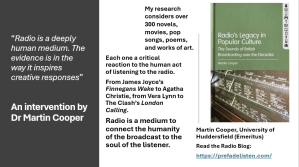

The piece you’ve just read is based on a presentation given to an online academic seminar on World Radio Day 2026, organised by the “Radio and Audio Studies Section” of the UK Media, Communication and Cultural Studies Association.
Read my previous article about AI here: https://prefadelisten.com/2026/03/14/artificial-intelligence-large-language-models-and-the-radio-industry/.

 Pre-fade Listen
One thought on “When a human worries about AI in broadcast radio… (Part 1)”