Earlier this year, February the 13th to be exact, I joined some festivities to mark annual World Radio Day. What is World Radio Day? Click here: https://en.wikipedia.org/wiki/World_Radio_Day.
And there’s the UNESCO site – which explains a bit more… https://www.unesco.org/en/days/world-radio.
In case you’re wondering, everyone has their day. For example, May the 4th is International Firefighters’ Day and they won’t thank you for making some unnecessary Star Wars joke. And since you ask, Sherlock Holmes Day is on May 22. But he’s fictional. Anyway, back to reality.
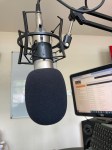
I have firm views about letting a computer write or create anything without the control of a human. So, next month I’ll be sharing my thoughts on radio and AI.
It’s a new mini-series, written by my human hands, to be read by you – also human. Sign up now. The essays are based on my contribution to an online academic seminar on World Radio Day 2026 mentioned above. The UNESCO theme was “AI is a tool, not a voice” and without giving much away I’m vehemently opposed to any non-human intervention in the creative process of radio broadcasting. Subscribe in the box on this page to find out more.
Meanwhile, some thoughts and gleanings. Topics here include money, critics, writers, drugs, bad management, and ancient college libraries.
But first, I’ve been lamenting what’s become of my old professional corner of the Beeb: Local Radio. Read this article I published on Substack (free of charge) and let me know your thoughts.

In the real world of journalism, reporting for radio and TV is often a challenge. It certainly is for the BBC’s man in Moscow who apparently reminded one political commentator of a squirrel… and not in a nice way. Read this and make the picture in your own mind.
https://www.bbc.co.uk/news/articles/c20g25w8j0xo
And at The Economist newspaper Robert Guest, one of the Deputy editors, recently said this:
“You can learn a lot about politicians from their attitude to journalists. I interviewed Sweden’s prime minister, Ulf Kristersson, when he was the leader of the opposition. He showed up at a cafe without an entourage or bodyguards, answered all my questions in flawless English, then politely excused himself after an hour to go to his next appointment. Contrast that with, say, a Sudanese minister who shouted and jabbed his finger in my face, refused me permission to visit Darfur and ordered me to write that his government was committing no human-rights abuses there whatsoever. (Of course, I wrote the truth instead.)”
You can read about the newspaper’s reporting on global press freedom, but it’s behind a pay wall, here: https://www.economist.com/leaders/2026/02/05/as-global-press-freedom-dwindles-corrupt-politicians-rejoice?utm_campaign=shared_article
Spoiler alert if you can’t afford the subs: “Journalists are often flawed, and many people distrust them. But if they cannot do their jobs, the world will be worse-governed.”
Now, to the subject of money and expense accounts. One of my favourite BBC Radio comedies is Ed Reardon’s Week. This quote is from series 14 episode 1, called “Prosecco o’Clock”, and first broadcast in 2021. At 16:40 there’s the following exchange where they’re discussing powerful assertive statements. Ed begins by offering the simple exclamation:
Ed Reardon: “NO!” That’s the most powerful word in the English language!
Jaz Milvane: I think you’ll find it’s “per diem”.
To add some context, Reardon is a failed writer with just one episode of Tenko to his name, whilst Milvane is a tasteless film director who says he misses shouting, “And cue the dolphins…!”
Ed Reardon is played by Christopher Douglas, Jaz Milvaine is Philip Jackson.
And the keen eyed will notice that the characters’ names are lifted from George Gissing’s 1891 novel New Grub Street, which explains a lot.
Then there’s one of my favourite quotes about this creative business of ours.

Kenneth Tynan was someone who made his own name in broadcast history once upon an evening on live TV in the 1960s. Look him up to find out what he said. But one of his calmer quotes was:
“A critic is a man who knows the way but can’t drive the car.”
That can be found in “Critic Kenneth Tynan Has Mellowed but Is Still England’s Stingingest Gadfly” by Godfrey Smith in The New York Times (9 January 1966).
https://archive.nytimes.com/www.nytimes.com/books/98/05/10/specials/tynan-gadfly.html
Thirty-three years before, Ernest Hemingway wrote a short story (in 1933) about how radio listening could become addictive. https://en.wikipedia.org/wiki/The_Gambler,_the_Nun,_and_the_Radio

“The Gambler, the Nun, and the Radio” explores how we all have an obsession, an opium, if you will. For some it’s gambling, for others it’s the radio… But his story reflected the eternal fear of new tech (think of the recent moral panics over video games, mobile phones, social media, and so on). Hemingway was writing when radio had only just reached 10 years of age. Still new and scary.
https://en.wikipedia.org/wiki/The_Complete_Short_Stories_of_Ernest_Hemingway
Meanwhile, here’s a cautionary tale of when radio becomes a challenge. And sometimes for the wrong reasons. It may be vulgar advertising, or it could be the way the money doesn’t add up. Scottie McClue and Derek Hatton. Management beware…This video is about Century Radio (Manchester) and is from the BBC2 series Trouble at the Top.
And finally, a mention of my books. One about radio, the other about the railways.
Both are now in my old library at Jesus College, Cambridge… which I’ve mentioned in passing here:
The College Library catalogue link is Radio’s Legacy in Popular Culture: the Sounds of British Broadcasting over the Decades: https://idiscover.lib.cam.ac.uk/permalink/44CAM_INST/rmisas/alma991013200942903606

And, Brazilian Railway Culture: https://idiscover.lib.cam.ac.uk/permalink/44CAM_INST/rmisas/alma9954083333403606 .
The latter is also at the big Cam Uni Lib, on the 6th floor of the South Wing last time I looked.
Or, if you want to buy them, read on and click the links below.

What we say on-air – and what others say about us as we speak through the microphone into the aether – is a recurring theme of my radio book: https://www.bloomsbury.com/uk/radios-legacy-in-popular-culture-9781501388231/
Radio’s Legacy is the story of radio’s first 100 years as told through literature, movies, pop songs and art. You can get a preview – before you buy – about my methods. This link takes you to Chapter One – which is available to look at for free online: https://bloomsburycp3.codemantra.com/viewer/61c091c7
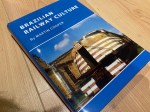
My railway book is Brazilian Railway Culture. Available here. https://amzn.eu/d/00BJUlaX
Thank you for reading. Do sign up (also for free) to receive a new piece, around the 14th of every month. If you spot a typo, you can win a pen. Let me know. And if you’re a bot, please stop scraping.

 Pre-fade Listen
2 thoughts on “Artificial Intelligence, Large Language Models and the Radio Industry…”