Ideas are the lifeblood of what we do as writers and broadcasters. I’ll have more about them in a moment, but first some things to avoid.
Especially if you’re a big beleaguered British public service broadcaster in the mid 2020s with a reputation to defend, with the right-wing press baying for your blood, and with a charter renewal in 2027 to think about.

- Don’t let ex-workers criticize your management styles
- Don’t get involved in court cases about talking animals and slander
- Don’t compare watching Panorama with attendance at any of the major religions
However, in an echo from history of almost ninety years ago, Robert Silvey did all three. Brilliant.

His autobiography about his time as the first head of the BBC’s Audience Research department has this and more. Already in the first twenty pages he has managed to crash into all three of these no-nos. I commend the book, published in 1974, to you. It’s very well written and offers another perspective on the Beeb between the mid 1930s and the late 1960s.
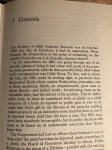
On page 1 he asserted that Reith was insufferable as a boss. On page 15 he joked (somewhat dubiously) that viewers watched Panorama on Mondays as religiously as “Catholics ate fish on Fridays and Anglicans washed their cars on Sundays.” And finally, on p. 17 for this triptych of bad-optics, the case of R.S. Lambert’s slander and the question of the talking mongoose (recently made into a film starring Simon Pegg and Minnie Driver). I am not making this stuff up. Read the litany of a BBC-in-disgrace-yet-again here:

https://www.bbc.co.uk/historyofthebbc/research/editorial-independence/mongoose-case/
Now, back to ideas and where writers and broadcasters keep them until they suddenly become useful. Read on here:
And here as well… which is a link to episode 2: https://prefadelisten.com/2025/11/14/radio-ideas-all-our-scrapbooks-part-2/

My next example is from the world of music. Robert Fripp is a founding member of the prog-rock band King Crimson, husband of Toyah Wilcox, and the guitarist who created that epic intro to Bowie’s Heroes. I’ve written about that – and its connection to radio – here:
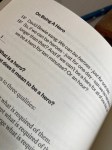
Robert Fripp’s been carefully hoarding scraps of paper from the early 1980s to the present day. His book with nearly all of those bits in was published in 2022. I include his work here as an outlier. It’s Fripp’s collection of notes, e-mails, web posts, diary entries and letters. Some, not many, are from other people offering critiques to Robert. It all builds a picture of the man. Bowie gets a mention on p. 154 (picture, right).
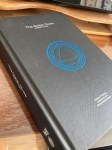
So, I take it to be more than a diary but a bit less of a Commonplace Book. Even so, it is a window into the mind of a serious and committed musician. It can on some pages appear as a random collection of thoughts, and includes one or two sour grapes, but I’d urge any reader to see beyond that.
There’s plenty of aphorisms and indeed the last 37 pages constitute a full alphabetical list. At the time of writing you can buy these as merch, as a set of playing cards; a kind of guitar-cerebral-Top-Trumps I suppose.

Robert’s key saying is “Honour necessity, honour sufficiency”, which the Guitar Circle and the associated Guitar Craft seek to put into practice as they carry out their music workshops. These often take place in rural monastic/religious retreats and involve the active participation of up to 150 musicians.

There’s so many guitars that on the first day together novices are shown how to get out of a chair without thwacking their neighbour in the face. Their instrument remains at all times strapped high on their chest. Seriously. For a whole week.

The courses, which have run for four decades around the world (Fripp, p. 39), can combine Alexander Technique assistance, relaxation and sitting sessions, as well as music and movement practice. Communal mealtimes include being serenaded by fellow guitarists eager to try out their skills. If you go to an Italian week-long session the food is vegan, and the coffee is excellent. Fripp’s Guitar Circle book is for dipping in to as you pick up your instrument.
Then there’s Talking Heads…

Again, David Byrne’s How Music Works (2012) is not strictly a Commonplace Book. It is, according to David and using two quotes from opposite ends of the book edited together,
“…not an autobiographical account of my life as a singer and musician …[but]… I think I managed to give a sense that the world of music is wider than my personal experience, but my experience figures in [this book] too” (p. 9, 335).

For example, in his exposition on “Business and Finances” (Ch. 7) he includes a passing mention of the importance of radio stations playing your tracks (p. 246), which he speculates could sell more records than a concert tour. And he mentions the annoying 1980s art of compressing your station’s signal to pump up the volume compared to your competitors on the dial (p. 123), which I reckoned gave the listener a headache after 20 mins or so. Here in the UK, we used Optimod gear to do the job – in an audio-responsible manner.
Is that making sense…? The 350-page book is ten chapters of musings by Byrne on the music biz and his experiences. Some bits are his random thoughts, but most follow a logical line of argument.
Still, it’s good to see his mentions of Adorno (p. 134, 282-4) who was, in my opinion, always a bit of a grumpy music theorist with a couple of wise observations.

What we say on-air – and what others say about us as we speak through the microphone into the aether – is a recurring theme of my current book:
https://www.bloomsbury.com/uk/radios-legacy-in-popular-culture-9781501388231/
Radio’s Legacy is the story of radio’s first 100 years as told through literature, movies, pop songs and art. You can get a preview – before you buy – about my methods. This link takes you to Chapter One – which is available to look at for free online:
https://bloomsburycp3.codemantra.com/viewer/61c091c7
Thank you for reading. Do sign up to receive a new piece every month around the BBC staff payday. And if you can spot a typo you can win a pen.
Finally, a memory. Not from my radio days but from my brief attachment as a regional TV news journalist in the pre-digital millennial days. The job back then involved going out with a cameraman (it was a gendered role in those days and in the late 90s nearly all of them working that particular regional news office were called Keith. How strange). Going out on a job, it was always the etiquette that the cameraman drove his own car. Tax deductible. It also had the kit in the boot. As he opened up I once offered in my cheeriest voice, “I’ll carry that for you.” There was a moment of icy silence. “Touch that camera and you’re dead.” Without looking at me, he went on, “You’ll take the legs.”
Vinten tripods are built so they are stable, reliable, heavy, and cut into your thighs, hips and shins at the precise delicate parts. They’re professional and unforgiving. They paired nicely with a grumpy Keith who refused to let anyone touch his 30k worth of camera gear. (“Always drive it around in a reasonably-priced car, me. None of your Volvo estate with heated driver’s seat. It fools the thieves.” Indeed, his car looked as if it was worth less than his tripod legs.) At least broadcast radio has always survived on fairly cheap kit.
As a postscript: that was a working life that involved not only the deployment of 2-person regional TV news crews out on location but also of video editors in the office. Once back in the building I’d have to find a suite free with an editor to cut my oov or upsot. Their words of greeting invariably started with a huge sigh and the disdainful question, “Who shot this lot then?” Ah, the delights of journalistic teamwork and office politics.

 Pre-fade Listen
Tripods are specially designed to be extremely uncomfortable and the mere mention of them brings a searing pain to my shoulders. The ruts are still there. I loathed location work that involved carrying kit and did, eventually, form such a close relationship with my small crew that it was I who got to carry the camera and the sound recordist (an ox of a man) the legs AND his kit. This arrangement also made the cameraman feel special… which, in turn, resulted in exemplary performance. Win-win.
And you’re right. Most cameramen ARE called Keith.
LikeLike