
In this piece I’ll be thinking about how fiction portrays journalists like us: radio presenters, investigative reporters, and the feckless politicians we have to interview… As if that’s not enough to drive you to turn the air blue…
But before all that, here’s Moss (Richard Ayoade) in the C4 series The IT Crowd (2006–2013), really letting go:
Later I’ll be looking at a 2020 TV series and a novel from the 1950s, both of which feature journalism. But first to a well-known Brit movie with “Richard Curtis” written all over it. And if you’re easily offended, please skip the next bit. Indeed, if you consider the moral and gender stereotypes of Love Actually (2003) to be outdated you can also move on.
But the clip I want to share is Bill Nighy swearing in a live radio studio. This is fiction, but every radio professional knows that the only safe way to behave in a radio studio is to ALWAYS assume every mic is live or at least being recorded by some unscrupulous studio manager/tech operator somewhere. And don’t let a has-been pop star say ANYTHING on a live radio show. Ever.
In Love Actually Curtis is using radio as a short cut in the narrative. It happens all the time in movies and TV drama: a scene cuts to a couple of people in front of microphones explaining what’s just happened and what’s about to occur. It’s a kind of “new viewers start here” sort of thing.
In this case Nighy’s playing a past-his-sell-by-date pop star struggling to get the words of his Christmas hit to fit the music. In the process he’s at Radio Watford being brutally honest. It’s a made-up radio station, but it’s loaded with typical Curtìsian down-at-heel overtones because it’s “north-of-London” not “north-London”.

And then there’s a TV mini-series with Hugh Laurie, Roadkill (BBC 2020), written by David Hare. It was a political state-of-the-nation piece for the new decade. In short, it’s grim. Here’s a making-of vid: https://www.youtube.com/watch?v=0kE5YJKoqBo
So, do politicians ever do radio? Of course. I’m thinking here of David Mellor, Nigel Farage, Gloria De Piero, George Galloway, Martin Bell, Edwina Currie and Alex Salmond. There are others. Remind me of their names by sending me a comment in the box below.
Back in this fictional TV mini-series a couple of scenes have Laurie playing a Tory MP appearing on a news-talk radio station (a fictional “All-Talk News-radio. DAB and 109.8FM”). Laurie – who in no way resembles a certain B. Johnson – is a regular guest on the phone-in presented by Mick “The Mouth” Murray. Suggestions as to this latter’s representation please in the comments below.
The technique of Laurie-in-the-radio-studio quickly explains the thoughts and motivations of the character. It is, if you will, a form of internal monologue. Again, these scenes include somewhat unnecessary swearing – perhaps in an attempt to give a sense of contemporary authenticity.
At 33’50” in episode 2, Hugh Laurie’s character, who by now is the Minister for Justice, says, “You can get away with anything if you just brazen it out.” Quite so, Minister.
Camera directors and cinematographers like to create a special framing in radio studio scenes.


It’s usually tight: head shots predominate, sometimes with the character leaning past a microphone that sits on an angle-poise stand. Both Love Actually and Roadkill use this.
Talk Radio (Oliver Stone, 1988) and Good Morning, Vietnam (Barry Levinson, 1987) are other examples discussed in my book. See below.
My next example is a British novel from the 1950s by an author mostly forgotten these days. So much so that Robert Harling’s entry in Wikipedia has him as a typographer, not a novelist. https://en.wikipedia.org/wiki/Robert_Harling_(typographer)
He was much more than a compositor and typesetter. He was in fact a friend of Ian Fleming, an editor at House and Garden and The Sunday Telegraph (at the same time!), as well as the designer of the typography on the cover of the annual Wisden Cricketers’ Almanack.
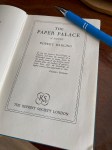
He wrote numerous pulp fiction novels. And here I want to concentrate on The Paper Palace (1951).
It’s about a London journalist’s investigation into events thirty years before, during the Irish War of Independence in 1919-21. The narrator’s research takes 300 pages and several weeks. He fits it in between his day job as the writer of his newspaper’s diary and gossip column, called “Objects and Subjects” – which is a neat, vacuous, invention by Harling.
Today such research would take just a couple of days on the internet. In the process, the reader finds out how Fleet Street investigative journalists did their job in the analogue era. The narrator visits archives containing personal papers, he goes to Companies House, to gentlemen’s clubs to check their records, he makes personal visits to interview people face to face and uses the small ads in the personal column of The Times.
Today you’d have to work hard to persuade your boss that such time-consuming work was going to be worth it. The unnamed narrator in the story describes his own editor thus: “Dealing with Wensley was sometimes like dealing with a handful of water.” (p. 133)
Even today, I know the feeling. I’ve had a couple of editors who’ve left me feeling like that. On the other hand, in the tradition of Evelyn Waugh’s novel, Scoop, Harling describes “the Baron”, the owner of his fictional newspaper, as a type of bloated Northcliffe figure (p.303), “Seated in the dark red leather armchair looking like a Michelin tyre as dressed by Saville Row.”
Harling has a good turn of phrase – reflecting his long involvement in newspapers, magazines and publishing. The novel, which has overtones of a hard-boiled mystery, is like many English thrillers of the era (from Buchan to Fleming) in that actual events and people are included in the narrative to add authenticity to the story.
At one point there’s a passing mention of a number of senior journalists, including Alistair Cooke who at the time was the Manchester Guardian’s foreign correspondent based in the United States. Cooke, of course, was also building his radio career, although Harling doesn’t mention this.
Finally, amidst the atmospheric descriptions of Fleet Street and the British newspaper industry in the immediate post-war years, Harling offers a handy definition of journalism (p.311),
“So I asked myself “Why?” You get into the habit of asking why in my job. And I smelt a story…”
Elsewhere (p.22), the Baron had given his reporter his own robust definition – linked to his eye to profits as the newspaper owner:
“To seize the attention and hold the interest (‘I repeat.’ He would rasp, ‘you seize by many means, but you hold by interest’) and what was to be seized was the attention of those extra million morons who were still outside the magic circle of the paper…”
Later (p.29), Harling observes that the printed words provided country homes and Rolls Royces for the paper’s owner but were only “pap for millions of morons.” The author clearly understood the business side of Fleet Street, and the cynical nature of newspaper owners. Although, as a reader, I’m struggling with being called a moron…
Talking of the newspapers, here’s a great front-page headline. It’s from the Daily Star in late 2024. The paper, previously known for its somewhat sexist content, had a winning spell with some seriously funny stuff – giving Private Eye a run for its money. As of 2026, the Star’s er, star, had waned a bit. We expect more.

For more analysis of film and TV shows that feature radio – like the ones discussed in this piece – read my latest book:
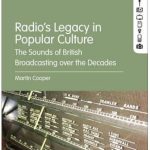
https://www.bloomsbury.com/uk/radios-legacy-in-popular-culture-9781501388231
You can also get a preview – before you buy – about my methods. This link takes you to Chapter One – which is available to look at for free online:
https://bloomsburycp3.codemantra.com/viewer/61c091c75f150300016f10af
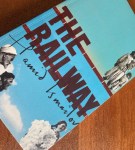
Sign up to receive my monthly articles about film, literature, radio and journalism. And on a final note, let me share my current favourite ending of a novel. It’s one I wish I’d thought of and used. It’s from Hamid Ismailov, a former BBC journo like me. https://en.wikipedia.org/wiki/Hamid_Ismailov His novel, The Railway (2006) has the final line, after a gut-wrenching narrative arc: “and that is all I know.”

 Pre-fade Listen