
“College bans students from listening to the radio.”
Read on for news of how one venerable and ancient international place of learning in the East Anglian region of England has banned radios from its grounds. Shock. Clickbait: you won’t believe what happened next. (Not much, really, but there is a picture to look at.)
I also consider how to keep the cultural barbarians from BBC Radio 3.

But first, I’d like to share some positive news, some lessons from history about the price of subscriptions for media. There’s been a lot in recent months about the cost of living.
I’ve previously published these thoughts and observations on Substack: https://martincooper.substack.com/. A couple of us on S***tack have been grumbling about the cost of subs we have to pay to our fellow writers to read their work.
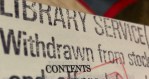
Which puts pressure on signing up and the resultant lack of reading, on top of the sad news that library books are being sold off…
I’ve read recently that books too are going to have to take a price hike. That’s because ink and paper are getting more expensive.
So, to lift the mood a little I was struck by a passage in Joad Raymond Wren’s The Great Exchange (Allen Lane/Penguin, 2025).
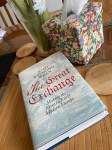
It’s an academic book, just short of 600 or so pages, but he strikes a delightful lightness of tone that keeps you fascinated. It’s his story about the circulation of news, avvisi, and subscription letters from the 1400s to the 1800s. For medieval merchants these were the forerunner of our “track your parcel” as they waited for news about ships arriving and leaving foreign ports with their cargoes.
So, here’s the encouragement.
Apparently in 1620 an annual sub to a weekly newsletter from one John Pory was £20 (p. 53). Using the Bank of England’s Inflation Calculator (yes, it exists. Look it up) that’s £5,000 a year in today’s prices. Think on. Are we undercharging these days? Is our writing undervalued? Is the hefty sub I pay to The Economist for print and digital suddenly good value?
As for me, I’m in a Subst**k backwater and levy no subscription. Indeed, the writing I post there points to my own website here at https://prefadelisten.com/ where since 2018 my regular monthly articles about radio are published. And there’s no subs on this site either. Mind you, a donation would be welcome.
Two personal S****ack recomendations, both with strong BBC connections: Nick Garnett – a fellow BBC Local Radio and BBC 5Live journo https://garnett.substack.com/, and Paul Karensa – a fellow Christian, Radio 2 Pause for Thought contributor, Radio 4 drama scriptwriter, and media historian https://paulkerensa.substack.com/.

So now, just a gentle shill for my book Radio’s Legacy. Available now. Thank you for reading. Buy it now. https://www.bloomsbury.com/uk/radios-legacy-in-popular-culture-9781501388231/
Oh, and apparently in the 1570s in England we were called Newsmongers (Wren, p. 51). Like sellers of fish, but without the smell. I suppose.
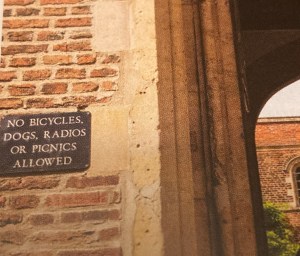
Meanwhile, my old university college (and I mean old because it was founded in 1496) has this sign next to the main porter’s lodge – warning against any wireless related activities amongst the hallowed courts of higher learning. I spoke to Jesus College, Cambridge, who – at the time of writing – couldn’t fully explain the history of this delightful sign. My guess, based on the development of non-lead-acid batteries and small portable radios, is that this was put up in the late 50s or early 60s when pocket transister radios became a thing. I could imagine the porters being particularly vigilant against the playing of pop music in The Orchard.
Back to the present, and the question of who’s listening to the radio these days. Audience research for UK stations is conducted by the organisation known as RAJAR, paid for by the stations themselves. If they don’t subscribe, you don’t get any figures. And, sadly, that’s the case with so many small community radio stations who just can’t afford the fees. I’ve written about a back-of-the-fag-packet workaround here: https://prefadelisten.com/2024/02/14/radio-listeners-tv-trailers-voice-overs-and-book-reviews/
So, for an analysis of the autumn 2025 UK radio listening figures, take a look at this. It’s by Adam Bowie. He receives sponsorship to be able to complete his analysis.
My observations: 50m people (86% of the UK) listen to the radio each week and fewer people are listening to AM/FM than ever before – they’ve moved over to DAB or to streaming. That raises a cart-and-horse question. Was it the recent AM analogue switch-off or the critical mass of DAB receivers in cars that swung it? I’ve written about technical determinism here: https://prefadelisten.com/2022/09/21/step-up-to-the-microphone-100-years-of-british-radio/.
And for the nostalgic, there’s more about the slow switch-off of Medium Wave/Long Wave broadcasts here: https://prefadelisten.com/2025/06/14/is-radio-just-all-about-the-sound/

And finally, what is in a name? Here’s two things about BBC Radio 3 that you knew to be true but never admitted to.
First, Robert Silvey was the Beeb’s founding head of Listener Research. Before him they’d just kind-of-guessed what the audience wanted.

On p. 113 of his 1974 autobiography he makes this statement:
Even a mere change of title could make a difference. No series of Chamber Music programmes ever attracted a substantial following until someone thought of leaving those fatal words out of the billing and calling it simply “Music in Miniature”.
And next, from over 40 years ago, is a prophetic clip from BBC TV’s Yes, Prime Minister. Pay attention to the scriptwriting of Antony Jay and Jonathan Lynn.
The Radio 3 line is excellent, as is the quote about “both” universities, and the shock at the mention of the East Midlands.
Why we need to keep BBC Radio 3 out of “the hands of the barbarians”, according to Sir Humphrey Appleby GCB KBE MVO. Wise words…
Thank you for reading. Do, if you feel so moved, sign up to receive a new piece every month, around the 14th.

 Pre-fade Listen
Thank you Martin – another engaging read!
And an interesting question regarding listeners migrating to DAB. I initially moved to DAB for what was promised to be ‘clarity’ on station output I already listened to. I wasn’t impressed because it didn’t happen – all that bubbling and stuff dropping out and FM is pretty good after all. But I perservered because suddenly there were one or two extra stations that I previously wasn’t able to receive. Having invested in a lot of good gear, I abhor the idea of having to listen everything streamed through a computer – which I tend to keep away from domestic life anyway. So it became a blend of FM and DAB. Then some creep invented DAB+ which meant a certain amount of redundancy in the DAB kit but, okay, more stations. However, then the Bauers and Globals moved in and the output from that great range of stations all became the same. Worse (the words ‘conversation’ and ‘passim‘ appear now), the BBC also lumped such a lot of its local programming together, and the variety diminished considerably. So we had – have – a much greater range of transmission systems (especially if you include streaming and catch-up) with considerably less programme variety on them!
It’s shame the UK didn’t pursue American-style HDRadio – hybrid digital, putting additional services digitally at the edge of the analogue signal. It would have kept the variety going and preserve the facility for a ‘locality’ aspect that national services wouldn’t bring.
I turned on my old LW/MW/SW radio at the weekend and could have wept: there’s nothing there. And show me a set of traffic lights in York where DAB+ doesn’t cut out every time, and I’ll buy a parking space.
The fact that every station shouts loud about BBC Sounds, Global Player, Alexa et al seems bonkers to me: why not actually broadcast these programmes “over the air”and reintroduce the validity of ‘broadcasting’?
And, even more dramatically, (and I’m afraid the ship sailed years ago with the BBC going online and starting up iPlayer), forget the TV licence and, if they can’t be bothered to make an appointment to view (a Lew grade expression inferring watching or listening live) or dig out the video or cassette recorder, – charge everyone for streaming programmes – both radio and TV!
It seems to work for Netflix, Apple TV, Paramount, Disney +…
(Oh, and one final whim. Give 198 Long Wave to Boom Radio. All those old 7″ singles would sound brilliant, weaving in and out of the æther. Remember Atlantic 252?)
LikeLike