
A bit later on I’ve got a treat from the 1930s – a non-CGI, analogue recreation of a wireless set. That’s strangely important in this context.
But first, I’ve written about how the word “visualisation” is being used in recent times in connection with the radio. Read more here…

Indeed, putting the visual into the aural is not a new thing. I’ve previously mentioned how movies from the 1930s-onwards and – more recently, since the 1970s, TV shows too – have struggled to portray radio presenters and radio studios.

There’s more in my book, which brings together around 300 examples across the decades. Zoom in to read these endorsements:



Consider shows like WKRP where, even though they had realistic mixing desks, the actors never properly addressed the mic and sometimes even forgot to put on their headphones. A common failing in TV shows and movies. Likewise, Frasier regularly appeared wearing “cans” but had rubbish equipment in front of him.
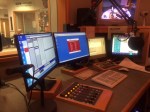
I’m not alone in being both fascinated and infuriated by this. I have a craving for accuracy. I’ve spent four decades in radio studios, and I still have to tell students they need to wear headphones when they broadcast. I blame media portrayals for this.
So, how accurately have radio stations been portrayed in TV and movies? Alan Cross rates them in this article from a news website in Canada…
Which is an excuse to watch this again…
But there’s always been a difficulty in dealing with the notion of bringing disparate media forms together. Radio is aural; television is, well, visual-visual according to the Greek-Latin etymology.
Back in the late 90s I spent a few months “on attachment” as a bi-media producer at a BBC Regional News programme. What that meant in practice was I’d have to hustle reluctant cameramen and video editors to let me have audio copies of the interviews the regional journalists had been out to film. Trust me, audio from a film or video recording was (and still is) rubbish. I’d have to wrangle audio clips that were echo-y, off-mic, muffled by rustling clothes, and ruined by passing traffic noise. Somehow, I’d use this stuff to make a radio package. Thoroughly embarrassing, as the criticism would land back on me rather than the video source.
Even today you can spot video sound: it’s rubbish, just clips grabbed from a TV doorstep.
The portrayal of radio is one of the key themes of my book: https://www.bloomsbury.com/uk/radios-legacy-in-popular-culture-9781501388231/ .
Radio’s Legacy is the story of radio’s first 100 years as told through literature, movies pop songs and art. You can also get a preview – before you buy – about my methods.
This link takes you to Chapter One – which is available to look at for free online: https://bloomsburycp3.codemantra.com/viewer/61c091c75f150300016f10af
So here, from 1934, is Roy Fox & His Band with “Tune In (Radiolympia Theme Song)”. The swanee whistle at the end of the song makes a good SFX of tuning an analogue radio… Just proves that you don’t need CGI eating the electricity of Icelandic servers to create a visualisation.
Thank you for reading. Do sign up to receive a new piece every month, around the 14th – just before the BBC’s regular payday for staff and freelancers.
 Pre-fade Listen