
The point is this: having shared some dubious jokes about the radio industry, the time has now come to poke fun at podcasting. I’ll reveal in a moment why I remain sceptical about “podcasting” (and I’m the one who just put that in quote marks. Feel free to do air-quotes, but don’t drop your phone).

I’m a professional radio broadcaster – previously for the BBC, for commercial radio stations in Britain, and for community radio services. I’ve also spent time teaching the art of radio at a University in Yorkshire. I know what I’m talking about.
Part one of this series of “Radio Jokes” is here: https://prefadelisten.com/2024/05/14/radio-jokes-the-ones-that-exist-may-not-be-funny/.
So, first some recent bits about podcasting. Each chosen because they put the thing in a dubious light. Coming up: I give you murder, crime, and a bit more murder… All of it fictitiously true. Stay with me on this one. There’s a couple of great movie and video clips later in this piece.

For many years I’ve been a fan of graphic novels and their artwork. My trips to France in the early 80s gave me the chance to bring back to the UK some of the greats of that era of bande dessinée. From England I’ve always enjoyed Eddie Campbell.
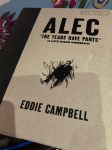
Not so much his From Hell and Bacchus work, which I find a bit too gruesome for my own reading taste, but certainly his autobiographical Alec series, and the Dapper John story. I’ll write more about Campbell’s work and its cultural importance another time.
Recently I stumbled across Will McPhail’s graphic novel, In. I mention it because it has the same autobiographical honesty of Eddie Campbell. They both use similar line and fill techniques which give a pleasing everyday humanity to their characters.
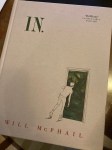
Anyway, McPhail’s novel is about the way we fail to tell ourselves the truth about our lives, and the way we end up lacking any emotional connections.
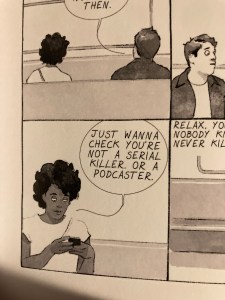
The hero of the story, Nick, meets a girl on the tube train. She sits across the carriage and sees that he’s sketching her in his notebook. In a cautious reaction she asks his name.
He then exclaims, “Are you Googling me!?!” Her reply appears in this frame from the novel. Classic. The reverse implication being that podcast producers are a bunch of serial killers or worse. Oh dear.

And Olivia Sudjic’s Asylum Road (2021) begins with the disturbing first sentence: “Sometimes it felt like the murders kept us together.” Modern life and a decaying relationship are here drawn in a fine yet claustrophobic narrative. As a result, the genre known as True-Life Murder Podcasts doesn’t come out well. Just saying. I recommend her novel. It’s a familiar yet disturbing story.


The Last Broadcast (2015) is a graphic novel created by two Brazilians, writer André Sirangelo and artist Gabriel Iumazark. It features a podcast called “Radio Silence”. It’s used in off-frame speech bubbles to drive the narrative forward.
The book is the story of a search across an apocalyptic subterranean world which is entered through a building at the base of a remote transmitter tower outside San Francisco. The story involves a “last broadcast” transmitted in the 1930s which the characters manage to receive in the present. There are passing references in its 200 pages to CB and ham radio, valve receivers, atmospheric interference, phone-ins, spiritism and Arthur Conan Doyle – an early tech broadcast fan and enthusiast of things wierd. Gothic steam-punk here we come…
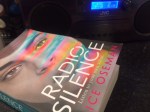
Alice Oseman’s novel is also called Radio Silence (2016). It’s a story aimed at teenagers and, like The Catcher in the Rye by J. D. Salinger first published in 1951, there’s a tone of address that intentionally excludes adults and directly targets its age group.
It’s about a 17-year old living in Britain, in between her A-level results and university. True to the genre, it contains storylines about feelings of alienation, making friends, and blended multicultural families. There are explorations of questions of gender, sexuality and the language used by a younger generation between themselves but not in front of their parents.
The novel mentions lots of consumer products, social media apps, and TV shows from the start of the century, for example The Office, Made in Chelsea, Twitter, Facebook and Tumblr. The central concept is a podcast called “Universe City”, which is a “show about a suit-wearing student detective looking for a way to escape a sci-fi, monster-infested university”. Hmm.

And for a summary of contemporary American podcasting, see the non-fiction graphic book by Jessica Abel (2015), Out on the Wire: The Storytelling Secrets of the New Masters of Radio. She describes podcasting as “narrative non-fiction”, known by British radio professionals as a “package” or “short-form documentary”. Is this a case of “pavement” vs “sidewalk”?
But look, True-Life Murder Podcasts just can’t get away with what they’ve created since their exponential growth from 2014 onwards.
The biteback begins here…
First, an example from The Simpsons (S32Ep06, 2020) and the episode called “Podcast News”. The story goes like this: for some reason, not fully explained, the truly great Kent Brockman presents a crime podcast called “Guilty Grampa”. Lisa is addicted. Kent declaims at the mic that, “This podcast is bought to you by ‘Shampoo Shuttle: drone delivery direct to your shower’.” Delightful. The show includes a walk-on voice part for Morgan Fairchild. Look her up in IMDb.
True Crime podcasts get what they deserve from the team in Spingfield.
Satires of True-Life Murder Podcasts have continued in the early 2020s. From the geriatric crime featuring Grandpa in Springfield, we move over to the East Coast where there’s a home for comedy actors of a certain age in a New York apartment block. Here’s the season 4 trailer for Only Murders in the Building (2024).
There’s more information about the series at https://en.m.wikipedia.org/wiki/Only_Murders_in_the_Building.
However, British TV has struggled to portray podcasts. Overall, there’s a difficulty in putting an audio product on the telly. You end up getting scenes of actors looking intently at a laptop screen. Not exactly action-led drama. That was the case in an episode of the British comedy drama series Shakespeare and Hathaway: Private Investigators.
“All that Glisters” (S03Ep08, 2020, BBC) is about a young woman, Emilia, making a podcast about how her mother was killed. She’s seen walking around Stratford-upon-Avon with a standard issue reporter’s mic on a wire that disappears into a canvas shoulder bag. But my experience tells me she’s too far away from her subjects to get a decent sound. I was always told to, “Shove the mic up their nose, and stay with them like a limpet if they back away.” Honest, tough BBC policy that.


You may’ve already seen my previous article about radio jokes: https://prefadelisten.com/2024/05/14/radio-jokes-the-ones-that-exist-may-not-be-funny/.
The latest addition to the roster of Private Eye cartoons is one from Richard Jolley (aka RGJ). In Eye no. 1630 of 16 Aug 2024, not long after the general election, he has a cartoon of a crowd of politicians. Across the top a banner reads: “The Rest is Ex-Politics”, a snide reference to a whole series of UK-based chat shows originating from Goalhanger – founded by Gary Lineker.
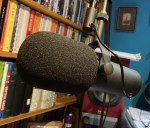
Seated at the table with four mics, looking like chunky Shure SM7s which are in favour these days, RGJ has the presenter saying, “Welcome to the show hosted by all the recent ex-MPs who’ve heard there’s money in podcasts.” That’s a great oxymoron and it made me smirk.
And do take a look at two of my previous rants about podcasts… Firstly, https://prefadelisten.com/2022/11/14/3286/. And there’s this one too https://prefadelisten.com/2022/08/15/why-technology-is-to-blame-for-100-years-of-radio-probably/. Let me know what you think.

The latter features a dilapidated outdoor billboard for Global’s Podcasts. I suggest the message here is in the photographic image as presented.
In conclusion, I have presented a number of satires at the expense of the “radio” craft that calls itself “podcasting”. Now, let’s consider life back in the world of linear broadcast radio. Do you remember, for example, singing back at the radio? For me the very idea of radio is that it has to be Sociable, Sincere, Authentic, Eventful and Daily.
It’s that last one which I think is important: the way radio shows and presenters can mark out the days and the times to become part of the heartbeat of our daily existence. Hearing the weather forecast on BBC Radio 5 Live means that it’s three minutes after I should’ve left for the bus. Simple, and without recourse to a digital device.

Audio-on-demand/Podcasts can’t do that for you; you’re the one that’s taken control of time – by downloading it – and removed the significance of the live voice in the daily thythm of your life. For a robust academic underpinning of all this, see Paddy Scannell’s excellent Radio, Television & Modern Life (Blackwell, 1996). The great Tony Blackburn and the equally fab Robbie Vincent get mentions. Marvellous.
At least one 21st century pop group, Porridge Radio from Brighton, have got the right idea of what radio is all about. It’s about being in a conversation. Here they are, singing about shouting back at the radio. It’s a pure emotional reaction and it’s wonderful. This is from 2022.
It’s almost as good as “Teenage Kicks” by The Undertones. Look that one up too.
But, let’s be honest, the Porridge Radio song only skims the surface of the listening experience. The next – and final – clip is truly what radio is really all about. Watch it, enjoy, search out the complete movie, and then read my book. The story so far: Curt has fallen in love in a romantic and delightful cinematic coup de foudre. A mysterious white car has just drawn up next to him at the traffic lights. Now he’s on a mission to find that girl of his dreams… Can The Wolfman help him?

For more analysis of film and TV shows that feature radio – like American Graffitti – read my book:
https://www.bloomsbury.com/uk/radios-legacy-in-popular-culture-9781501388231/
You can also get a preview – before you buy – about my methods. This link takes you to Chapter One – which is available to look at for free online: https://bloomsburycp3.codemantra.com/viewer/61c091c75f150300016f10af
 Pre-fade Listen
One thought on “Radio jokes – can podcasting ever be funny?”